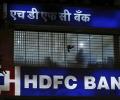
HDFC Bank's latest shareholding data showed that the room for foreign investment has fallen just 5 basis points short of the threshold set by Morgan Stanley Capital International (MSCI) to fully include the stock in its indices. Currently, the index provider has applied an adjustment factor of 0.5 since the foreign room is less than 25 per cent. Removal of the adjustment factor will result in inflows of a massive $4.8 billion (Rs 40,000 crore) into HDFC Bank, according to Brian Freitas, a New Zealand-based analyst with Periscope Analytics.

Exchange-traded currency derivatives volumes are likely to drop in view of new Reserve Bank of India (RBI) rules, casting a cloud over further participation of retail investors and proprietary traders. There are concerns that existing positions without any underlying exposure will need to be liquidated. Also, weighed down by dollar demand from local oil companies and weakness in its Asian peers, the rupee on Wednesday (April 3) ended at a new closing low of 83.44 versus the US currency.
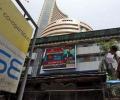
Shares of Avenue Supermarts (DMart) have rallied 15 per cent in the past month, even as the benchmark National Stock Exchange Nifty has remained flat. The stock has garnered favourable commentary from both fundamental and technical analysts after three years of poor performance. "DMart has reached its first 52-week high since October 2021, taking off from solid base formations.

The National Stock Exchange (NSE) on Tuesday said it has halved the lot size for trading derivatives contracts for the Nifty 50 index to 25 and also reduced the lot sizes of the Nifty Financial Services and Nifty Midcap indices as part of its periodic revision. "All contracts, i.e. weekly, monthly, quarterly, and half-yearly expires available for trading from the trade date of April 26, 2024, onwards will be with the revised market lot size," the NSE said, referring to applicability of the change for Nifty 50. The lot size in the derivatives segment refers to the fixed number of shares in a unit or group for which contracts are traded.

Hong Kong has regained its spot as the world's fourth-largest market following a broad market rout in Indian equities. Currently, the Chinese territory's market capitalisation stands at $4.9 trillion versus India's $4.75 trillion, according to data compiled by Bloomberg. In January, the domestic equity markets' market capitalisation had surpassed that of Hong Kong following a spectacular rally in the small- and midcap stocks.

'While Indian markets are indeed not inexpensive, the valuations of largecap stocks are still a considerable distance from being overstretched.'

Jefferies has identified 11 stocks set to benefit from long-term macro trends like capital expenditures, government manufacturing initiatives, and financialisation.
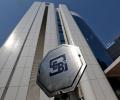
Before framing regulations to curb 'misleading' messages and stock recommendations by finfluencers (a portmanteau of the phrase 'financial influencers'), the market regulator plans to put in place some 'building blocks' to ensure smooth enforcement. Madhabi Puri Buch, chairperson of Securities and Exchange Board of India (Sebi), is of the view that the 'traditional approach may not work' to rein in finfluencers. "There are many interlinked pieces in our regulations - investment advisor regulations, research analyst regulations, the fact that we don't have algorithmic (algo)-related regulations, what brokers are permitted to do, and what is incidental advice.

The Indian equity market clocked record average daily turnover (ADTV) in both the cash and derivatives segments in February amid a spike in volatility. The ADTV for the cash segment for both the exchanges combined came at Rs 1.27 trillion, while the same for the derivatives or the futures and options (F&O) segment stood at Rs 483 trillion in the previous month. The volumes for both cash and derivatives have almost doubled from a year ago on the back of rising retail participation in the world's fourth largest equity market.

Madhabi Puri Buch, the first female chairperson of Sebi, doesn't plan to rest on her laurels in her third and final year in office and has set out an ambitious goal, such as moving towards a same-day and instantaneous settlement cycle for the secondary market.

The Securities and Exchange Board of India (Sebi) has asked fund houses operating smallcap funds with a large corpus to share data on their holdings in the total free float of smallcap stocks, according to sources. This is part of the stress tests that the regulator wants fund houses to undertake amid a surge in inflows into smallcap schemes and growing concerns about valuations. Free float refers to the quantum of freely available shares for trading on the stock market.

The mystery surrounding the alleged fund diversion from Zee Entertainment Enterprises (Zee) by founders Subhash Chandra and Punit Goenka has thickened with speculations of an amount multiple times higher than that cited by the ex-parte interim order passed by the Securities and Exchange Board of India (Sebi) dated June 12, 2023. While Zee shares witnessed a fresh selloff on Wednesday, news reports of accounting fraud left investors guessing about the hole in the media broadcaster's books. An order by the Securities Appellate Tribunal (SAT) in October 2023 had clearly hinted that Sebi's investigation had found a deeper rout.

It's not only the Indian markets that command a valuation premium over their global peers; shares of subsidiaries of India-listed multinational companies (MNCs) also trade at rich valuations compared to their parent companies. An analysis of 12-month forward price-to-earnings (P/E) and price-to-book (P/B) multiples of domestically listed MNCs shows that most quotes have a premium ranging from 2.1x to 6x that of their parent. Similarly, P/B, in most cases, is significantly higher in the domestic market.
Rising outgo towards clearing and settlement fees has led to an altercation between the BSE and the National Stock Exchange of India (NSE), with the latter striking down the former's request to lower the charges. NSE said it has no plans to restructure the same and that it will continue with the pricing defined under the interoperability framework. The interoperability framework, introduced in 2019, allows trades executed on any of the exchanges to be settled or cleared at either of the two clearing corporations -- NSE Clearing (NCL) or Indian Clearing Corporation (ICCL), fully-owned by the NSE and the BSE, respectively.

South Korean auto giant Hyundai Motor Company is considering tax implications of listing its Indian unit before taking a final call, according to sources privy to the development. Hyundai Motor is mulling an initial public offering (IPO) for its Indian arm to raise around $3 billion (at a valuation of up to $30 billion), and talks are in the early stages between the company and bankers, banking sources revealed. Hyundai Motor India Ltd (HMIL), however, declined to comment on the development.

The Securities and Exchange Board of India (Sebi) is considering segregation of settlement for proprietary trades and retail trades to avoid misuse and circumvention by certain brokers, its chairperson Madhabi Puri Buch said recently. Proprietary trading refers to trades done by brokers and other financial institutions using their own capital. "There are some people who are permitting access to their clients through prop accounts for a variety of reasons, including wanting to fund their margins.

Only a fifth of foreign portfolio investors (FPIs) in breach of the market regulator-specified thresholds may need to provide enhanced disclosure on ultimate beneficiaries, thanks to exemptions being provided, according to people in the know. The ultimate beneficial ownership (UBO) disclosures, for FPIs with over 50 per cent holding in a single corporate group or over Rs 25,000 crore exposure to Indian assets, will be required from February 1. But, depending on their category, FPIs will have 10-30 working days to submit these granular details.

With the government clearing the decks for direct listing at the Gujarat International Finance Tec-City (GIFT City) International Financial Services Centre (IFSC), issuers will wait for the ecosystem to develop further before firming up their listing plans. In the meantime, most companies may continue to prefer listing in the onshore market, even as the new avenue provides key benefits such as tax waivers and reduced foreign exchange risk. Sources said that a few key things need to be ironed out further.

Asia Securities Industry & Financial Markets Association (Asifma) has raised concerns about the Securities and Exchange Board of India (Sebi) proposal to introduce a T+0 settlement cycle. The industry association of top foreign portfolio investors (FPIs) has stated that this move could give rise to several issues, including the bifurcation of the market, liquidity fragmentation, and deterioration of market quality. In a discussion paper floated last month, Sebi has proposed a separate same-day settlement cycle that will run parallel to the existing T+1 cycle, where trades are settled the next day.

Alternative investment funds (AIFs) have not seen any significant redemptions from financial institutions even though the 30-day timeline provided by the Reserve Bank of India (RBI) to liquidate their holdings or make full provisions ends recently. Sources said the industry is awaiting certain relaxations or extensions based on the recommendations submitted to the banking regulator. On December 19, the RBI restricted financial institutions and banks from investing in AIFs where there is any downstream link or exposure to a debtor firm.
 © 2026 Rediff.com - Investor Information - Advertise with us - Disclaimer - Privacy Policy - Sitemap - Feedback - About us - Terms of use - Grievances